
The rupee has been among the The RBI uses the Iran-US peace deal to bolster its forex reserves.

The Indian government has imposed a new windfall gains tax of Rs 3 per litre on petrol exports, while simultaneously reducing the levy on diesel to Rs 16.5 per litre and aviation turbine fuel (ATF) to Rs 16 per litre, effective May 16.

At sunset, in Vashi, New Bombay, a modest roadside stall, near the entrance of General Arun Kumar Vaidya Kala Kendra, quietly draws a steady stream of endless customers -- office-goers, students, families and regulars.

US President Donald Trump stated that Iran is eager to make a deal and predicted a sharp decline in oil prices due to abundant supply, amidst a Senate resolution to limit his war powers in Iran.

Indian investors have seen their wealth erode by a staggering Rs 16.77 lakh crore over four trading sessions, as the markets faced deep losses driven by elevated crude oil prices, geopolitical tensions, persistent foreign fund outflows, and a record-low rupee.

Major paint companies in India, including Asian Paints, Berger Paints, Akzo Paints, and Kansai Nerolac, have announced price hikes ranging from 1% to 8% across various product lines, effective from mid-March to late April, in response to persistently high crude oil and gas prices.

Much will depend on how the protagonists use the current interlude to work proactively for the beginning of a durable settlement or, on the contrary, prepare for a new round of escalation, points out Ambassador M K Bhadrakumar.

Indian stock markets experienced a significant sell-off, with the Sensex tumbling over 1,300 points, driven by escalating crude oil prices due to US-Iran tensions and Prime Minister Narendra Modi's call for austerity measures, which amplified investor concerns about India's economic outlook.

Indian benchmark equity indices, Sensex and Nifty, snapped a three-day rally, tumbling nearly 1 per cent due to heavy selling in IT stocks, a jump in crude oil prices, foreign fund outflows, and fears of prolonged instability in West Asia.

The Asian Development Bank (ADB) has revised down India's GDP growth forecast for fiscal year 2026-27 (FY27) to 6.6 per cent from an earlier 6.9 per cent, primarily attributing the change to elevated energy prices stemming from the Middle East conflict. Despite this moderation, India is still expected to remain the world's fastest-growing major economy.

Gold prices in the national capital fell by Rs 600 to Rs 1.64 lakh per 10 grams, influenced by tentative progress in US-Iran negotiations, which reduced demand for precious metals. However, unresolved tensions surrounding the Strait of Hormuz continue to keep traders cautious.

ITC reported a 16.2 per cent year-on-year drop in consolidated net profit to 4,394.13 crore in Q1 FY27, primarily due to a significant increase in taxes on its cigarette business. Consolidated net revenues also declined by 11.1 per cent to 19,114 crore, missing analyst estimates.

The Indian rupee depreciated 20 paise to close at a fresh all-time low of 94.88 against the US dollar, driven by surging Brent crude oil prices, hovering around USD 115 per barrel, and persistent foreign capital outflows.
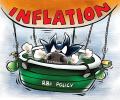
The Reserve Bank of India has increased its retail inflation projection for 2026-27 to 5.1 per cent, up from an earlier estimate of 4.6 per cent. This revision is primarily attributed to mounting input costs, driven by the pass-through of higher global energy prices to domestic petrol and diesel rates, which have seen significant increases since May.

Indian equity benchmark indices experienced a significant drop in early trade, with the BSE Sensex falling over 525 points and the NSE Nifty down more than 164 points, primarily due to rising crude oil prices and ongoing uncertainty surrounding the US-Iran conflict.

Indian markets on Dalal Street rallied sharply as easing tensions in the US-Iran conflict and stable oil prices boosted sentiment. Track Nifty 50 and BSE Sensex performance and key global triggers.
The Indian rupee plummeted to an all-time low of 95.80 against the US dollar, settling at 95.66, driven by elevated crude oil prices and escalating geopolitical tensions in West Asia, despite potential RBI intervention and import curbs on gold.

Indian benchmark indices Sensex and Nifty experienced volatile trade, declining in early deals before fluctuating, as investors reacted to unabated foreign fund outflows and rising geopolitical uncertainties, particularly in West Asia.

Reliance Industries shares rose over 1 per cent after the company reported record quarterly core profit and EBITDA for the June quarter, driven by strong performances in its oil-to-chemicals and telecom businesses.

'Investors shouldn't let fear dictate their decisions. The most important step is simply to begin investing.'

IT stocks had their worst first half fall in decades, with the Nifty IT index declining 31% in the January-June 2026 period, its biggest decline in the first six months of a calendar year since 2003.

Indian stock markets are set to be influenced by ongoing developments in the US-Iran conflict, fluctuations in crude oil prices, and the latest quarterly earnings reports from major corporates, with foreign investor activity also playing a crucial role.

Reliance Industries (RIL) delivered a better-than-expected operational performance in Q1FY27, driven by a recovery in its oil-to-chemicals (O2C) business and robust gains in the telecom (Jio) segment, though its retail arm missed estimates. Analysts highlight the upcoming Jio Platforms IPO and execution in new energy and consumer businesses as key triggers for the stock's future growth.

Why the industry's public position changed is difficult to say. What the developments did establish, though, is that ethanol-blended petrol has become one of the country's most politically and commercially sensitive policy issues.

Indian oil marketing companies are incurring significant losses, selling petrol at a Rs 14 per litre loss and diesel at Rs 18 per litre, as elevated global crude oil prices, exacerbated by the West Asia crisis, outpace capped retail fuel rates, according to rating agency Icra.
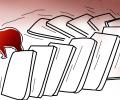
Markets face risk of a prolonged bear phase as oil shocks and geopolitical tensions test inflation, growth and investor confidence globally, points out Debashis Basu.

The Reserve Bank of India (RBI) maintained its key policy rates for the fourth consecutive time, keeping the repo rate at 5.25 per cent, while the benchmark BSE Sensex closed 152 points higher in a volatile session, recovering from an intraday dip.

India has no plans to ration fuel supplies despite ongoing disruptions in global energy markets, according to a top oil ministry official. The country has maintained adequate inventories of crude products and LPG while diversifying imports to manage supply risks.

Indian benchmark indices Sensex and Nifty experienced volatility due to conflicting developments in West Asia, including reports of the Strait of Hormuz closure, which led to a rebound in crude oil prices and heightened investor concerns about supply disruptions and inflation.
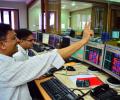
Indian markets on Dalal Street rallied sharply as easing tensions in the US-Iran conflict and stable oil prices boosted sentiment. Track Nifty50 and BSE Sensex performance and key global triggers.

After Maharashtra's crackdown on analogue paneer, here's what dietitians say about its nutritional value, health concerns and how to choose fresh paneer.

Will rising tensions between US-Israel and Iran threaten crude oil supply through the Strait of Hormuz, putting India's fuel prices, imports, and economic stability at risk?
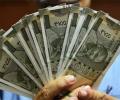
The rupee weakened to a record low against the US dollar due to Gulf tensions, rising oil prices, and foreign capital outflows.

Insights from behavioural economics suggest that an ambitious nudge can be effective if three conditions are met, points out Ram Singh Insights from behavioural economics suggest that an ambitious nudge can be effective if three conditions are met, points out Ram Singh, director, Delhi School of Economics.

The Indian rupee appreciated by 23 paise to settle at 92.91 against the US dollar, driven by a weakening American currency, retreating crude oil prices, and renewed foreign institutional investor (FII) inflows amid increasing hopes of easing geopolitical tensions.

Indian equity benchmark indices Sensex and Nifty rallied in early trade, driven by reports of a second round of talks between the US and Iran, which are fostering hopes for a resolution to the West Asia conflict, coupled with Brent crude oil prices trading below the USD 100 per barrel mark.

Small- and midcap stocks have delivered their biggest monthly rally in 12 years, but rising oil prices and global tensions could make the road ahead volatile.

'OMCs are incurring losses of Rs 1,000 crore per day due to the West Asia crisis.'

Indian equities on Dalal Street saw volatility as global market trends and oil price hike impacted investor sentiment. Track Sensex, Nifty50 movement and key market drivers for Apr 23, 2026.

Moody's Ratings has highlighted that Indian banks are among the most exposed in the Asia-Pacific region to the West Asia crisis, primarily due to India's high dependence on energy imports, which could lead to increased inflation, higher interest rates, and strained borrower cash flows.
